Local Innovators Series: Spotlighting Nature Inside Out
- Pencil Case | 22foramoment.wixsite.com/every-day

- Mar 17, 2021
- 4 min read
Updated: Aug 19, 2023
It was a warm April day in 2020. The early days of the pandemic in Jakarta. Like half of the world, I was browsing for cloth-masks online.
I remember being quite intrigued by Khaya Heritage’s post that said that many thoughts and decisions go behind a simple mask :

Certainly this hit this customer’s pain point, I thought. Sure enough, the cloth masks that arrived were well-made and comfortable. I even had some shipped overseas to friends.

Khaya Heritage, is an eco-friendly local fashion brand established over 5 years ago. It’s adorable kids fashion pieces can be traced back from Jeany, the co-founder’s insatiable search for cute, comfortable age-appropriate batik wearables for kids.
“There were kids batik clothes around ofcourse – but they looked more like adult clothes in small sizes. Or at least that was what my sister and I thought. And, so we thought, why not make our own? That was start of Khaya Heritage”, Jeany explained.
Khaya didn’t start out as an eco-friendly label. It was only after Khaya was born that Jeany was dumbfounded to discover the enormous amount of waste that the fashion industry creates.

This bitter reality took her on a journey to discover ways to manage, and mitigate the damage created by the fashion industry.
Zero-waste Cutting
The simple yet highly effective practice of zero-waste cutting was one that Khaya started using - profoundly believed in and singularly adopted.
“Zero-waste cutting may take a bit of time to figure out at the start, but once you've started, it in fact makes the whole cutting process much easier as the whole pattern for multiple pieces has been set in one-go, leaving no left-over fabric.”
Natural Dyes
Realizing that toxic fossil-fuel pollutants are created by synthetic dyeing, Khaya began to shift to using natural fibers and dyes.
Natural Fibers
In simple and clear language, Khaya relentlessly continues to share her knowledge on the hidden contributors of environmental damage, which ultimately cycle back to our lives.

Khaya posts: “Synthetic fibres are fibres produced by chemical synthesis, not derived from living organism. Most of them are derivatives of plastic, thus they start out as non-renewable petroleum.
They were developed to act as a stronger and more long lasting alternative to natural fibres (cotton, linen, natural silk, etc). Synthetic fibres also tend to be more water and stain repellent, as well as wrinkle resistant.
However, those advantages also become their downsides:
1. They don't absorb sweat, making them uncomfortable to wear.
2. They are also non-biodegradable, making them part of the plastic waste problem.
3. Yet arguably the worst problem coming out of plastic-derived fibres is that they shed #microplastic every time we wash them.
The micro-plastic enters the waterways and the ocean, gets eaten by the fish and eventually reaches our dinner plates.
Micro-plastic also disrupts the natural metabolism in many living creatures, thus damaging the balance in the ecosystem."

For more on micro-plastics's threat to human health read here.
Product Life Extension
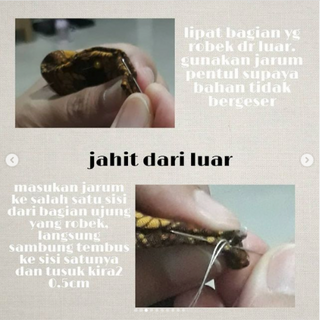
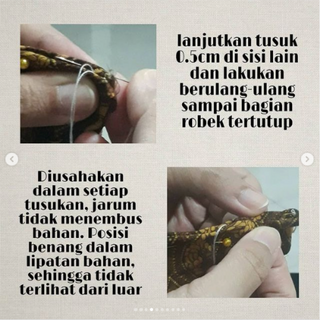
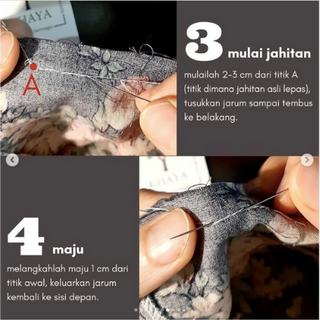
While it may seem counter-intuitive for fashion brands to want customers to buy less frequently, Khaya seems to be doing just that. Quick DIY repairs, upcycle and re-use tips, as well as where to channel clothings that can no longer be used, are messages that Khaya resounds especially on its social media, as Jeany truly believes that sustainable fashion is multi-faceted.









Cleaning
Small as Khaya's team may be, Khaya’s commitment and attention to detail, are anything but. Along with my beautiful silk batik scarves order, came a few small brown paper-wrapped package of soapnuts, complete with her linked instructions bit.ly/khaya-lerak on how to use it as a natural cleaner.

Not stopping there, Khaya also shares detailed tips on how to use other natural cleaners such as lemon, vinegar or baking soda.
The Road Less Traveled
While the mission to adopt and promote sustainable fashion became stronger and more relevant for Khaya, it has not been without its set of challenges.
From a design perspective, the variety of colours from natural dyes were more limiting compared to synthetic dyes. From a market perspective, slow fashion, unlike fast fashion, tend to deviate towards more timeless designs, not riding on the wave of what is trending.
But this hasn’t stopped Khaya from coming up with pieces with multi-functional uses, creating variety and ideas for customers to mix and match, inking bold fashion statements.

While from a supply chain perspective, Khaya works with suppliers who share the same sustainable vision, in the treatment and processing of fabric. However, to go as far as whether the white cotton on which the batik is drawn, was processed sustainably or not, is still a struggle today.
To Know is to Love
As Jeany uncovered more about batik, she found herself falling deeper in love with things behind and beyond the batik heritage


Take for instance the batik hand-carved wooden print blocks (swipe for second slide above) which surprisingly still exist, go completely invisible and under-appreciated.
These batik artisans, whose work are likely inspired by the surrounding beautiful nature at of the twin Sumbing Sindoro mountains, in Temanggung, Central Java, use starch instead of the more commonly known wax as the resist-agent on their cloths, each for their own reasons.
Here lies golden opportunities for such rich cultural knowledge to be imparted to our urbanites and nurture greater appreciation for sustainable, traditional, locally made goods.
Ever conscious of the need to share the message to a wider audience, Khaya's products are priced reasonably, compared to many sustainable fashion we see around. Khaya's dream is that the more people who buy the product, the more the buy-in to the philosophy behind it, and the more support we get for a cleaner world for us all.
This is where Jeany sees Khaya playing its part on the fashion stage - as an advocate and educator of sustainable fashion, carrying the pride of our Indonesian heritage, one stitch at a time, one piece at a time.
I'm excited to see Khaya Heritage heed its unapologetic calling, to make it's mark in the fashion world and as a sustainable everyday brand, not only for what it means to our Indonesian artisans, but also, the open invitation we can all to partake in, for a more liveable earth.
After Khaya, you'll want to see how another local innovator thrives during the pandemic.
View the latest post on how one school in Bogor celebrates failures
Image source: @khaya.heritage


Comments